Invasive Species
Oriental Bittersweet
Celastrus orbiculatus
A woody vine that climbs, strangles, and topples mature trees under its own weight.
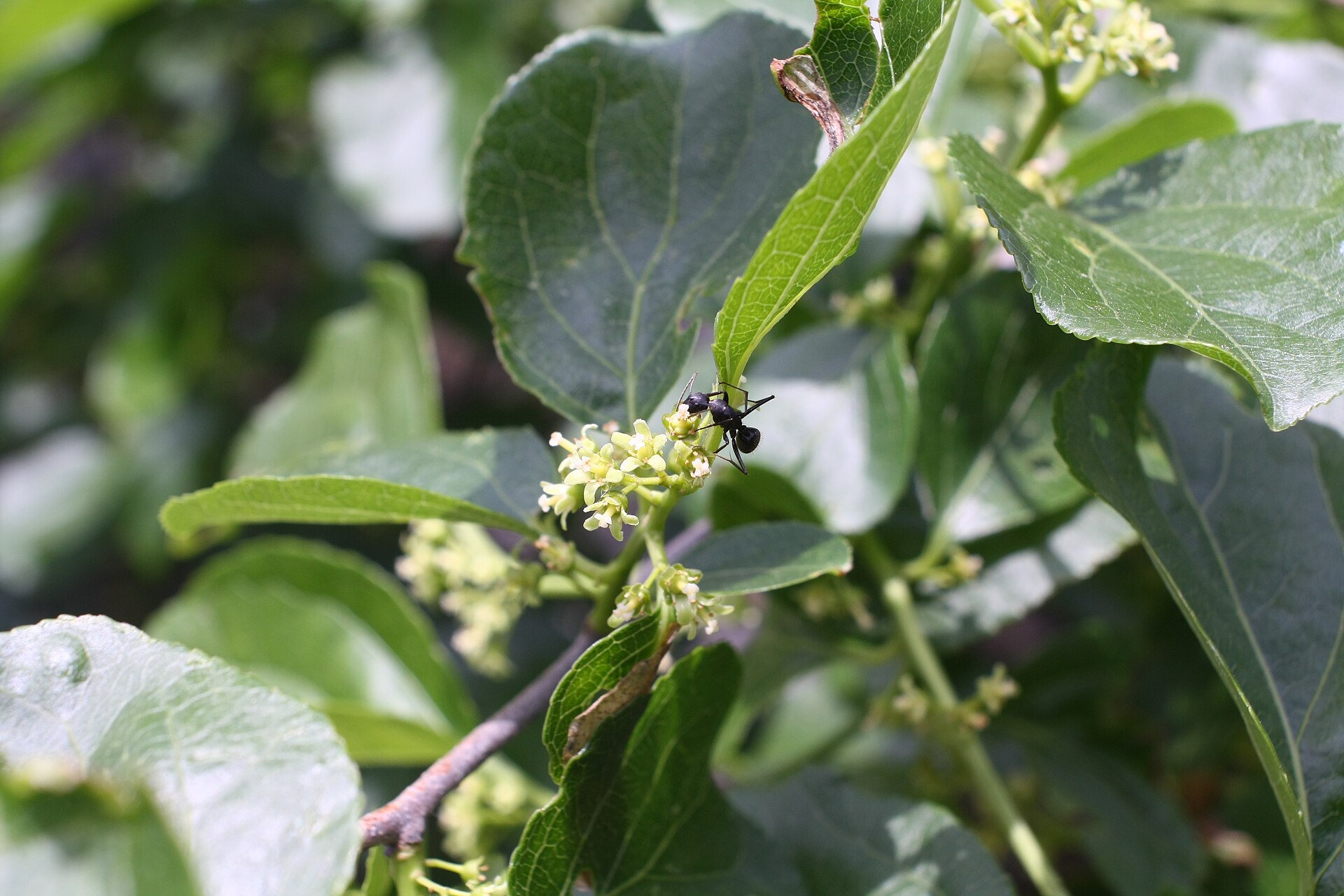
📝 Draft content — written for your review. Verify the identification and removal details before publishing.
Why it’s harmful
Oriental (or Asiatic) bittersweet is a woody vine that climbs high into the canopy, wrapping around trunks and branches.
- It girdles and strangles trees and shrubs, cutting off their flow of water and nutrients.
- Its sheer weight can bend and topple even large trees, especially in wind, ice, or snow.
- It forms dense thickets that smother native shrubs and the wildflowers pollinators feed on.
- It hybridizes with and displaces our native American bittersweet (Celastrus scandens).
- Birds eat the showy berries and spread the seeds far and wide.
How to ID it
- Vine: a twining woody vine, light gray-brown, that can grow as thick as your wrist on old plants.
- Leaves: alternate, rounded and glossy, with finely toothed edges.
- Fruit position — the key clue: flowers and berries grow all along the stem in the leaf joints (axils). Native American bittersweet produces fruit only in clusters at the branch tips.
- Berries: yellow capsules in fall that split open to reveal bright red-orange fleshy seeds.
Look-alike: Native American bittersweet is worth protecting — the fruit-position difference (along the stem vs. only at the tips) is the easiest way to tell them apart.
📸 2 photos to help you recognize it in different settings and seasons.Click any photo to enlarge and browse.
How to remove it
- Young vines & seedlings: pull them out by hand when the soil is moist, removing as much root as possible.
- Vines climbing trees: cut the stem near the ground to relieve the tree. Do not try to rip vines down out of tall trees — falling deadwood is dangerous. Cut them low and let the upper portion die in place.
- Expect resprouting: cut stems regrow vigorously. The most reliable kill is an immediate cut-stump herbicide treatment (triclopyr or glyphosate) on the fresh-cut surface, ideally in late summer or fall.
- Dispose of berries: bag and trash any fruit so birds can’t spread it.
- Monitor: re-cut and re-treat regrowth over several seasons.
Sources and local guidance vary — when removing invasives, follow the latest advice from groups like the Massachusetts Invasive Plant Advisory Group (MIPAG) and your local conservation commission.