Invasive Species
Black Swallow-wort
Cynanchum louiseae
A milkweed relative that lures monarchs into laying eggs their caterpillars can't survive on.
📝 Draft content — written for your review. Verify the identification and removal details before publishing.
Why it’s harmful
Black swallow-wort (also sold historically under the name Vincetoxicum nigrum) is a perennial twining vine in the milkweed family — and that family connection is exactly what makes it dangerous.
- It is an “ecological trap” for monarch butterflies. Because it’s related to milkweed, monarchs sometimes lay eggs on it, but the caterpillars cannot survive — so every egg laid there is lost.
- It forms dense mats that smother native plants, including the true milkweeds monarchs actually need.
- It releases chemicals that suppress neighboring plants (allelopathy) and is toxic to livestock and deer, so nothing grazes it back.
- Once established, it is one of the hardest invasives to eradicate.
How to ID it
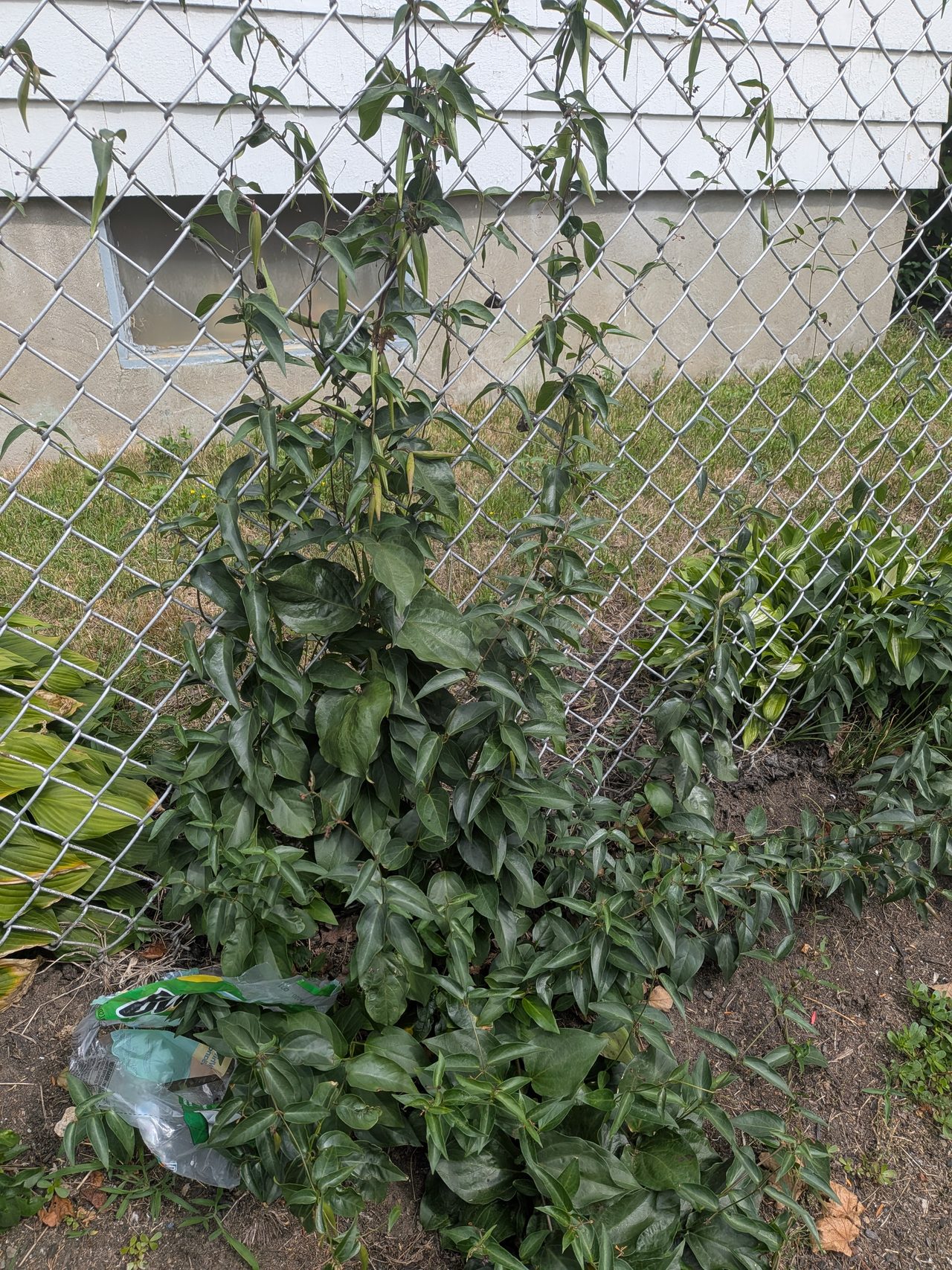
- Vine: a slender, twining vine that climbs over other plants and fences, 3–6 feet long.
- Leaves: opposite, shiny dark green, oval with a pointed tip.
- Flowers: small, dark purple to nearly black, star-shaped with five petals, slightly fleshy and faintly hairy — blooming in early summer.
- Seed pods: slender, tapered pods (like skinny milkweed pods) that split open to release seeds carried on white silk.
- Sap: broken stems ooze a milky sap, like other milkweeds.
📸 5 photos to help you recognize it in different settings and seasons.Click any photo to enlarge and browse.
How to remove it
This one rewards persistence above all.
- Stop the seeds first. The single most important action is to clip off and bag the seed pods before they ripen and split — this halts the spread even if you can’t kill the plant yet. Trash them; never compost.
- Small patches: dig out the entire root crown (the dense knot of roots at the base). Any rhizome left behind will resprout.
- Mowing or cutting alone won’t kill it — it resprouts from the roots — but repeated cutting plus pod removal weakens it over time.
- Larger infestations: a foliar herbicide (triclopyr or glyphosate) applied to actively growing plants, repeated over multiple seasons, is usually necessary.
- Be patient: full control often takes several years of follow-up.
Sources and local guidance vary — when removing invasives, follow the latest advice from groups like the Massachusetts Invasive Plant Advisory Group (MIPAG) and your local conservation commission.