Invasive Species
Common Buckthorn
Rhamnus cathartica
A thorn-tipped shrub-tree that leafs out early and holds its leaves late, shading the forest floor bare.
📝 Draft content — written for your review. Verify the identification and removal details before publishing.
Why it’s harmful
Common buckthorn is a large shrub or small tree that has invaded woodlands, hedgerows, and yards throughout the Northeast.
- It leafs out earlier in spring and holds its leaves later in fall than almost any native — casting deep shade that starves out native wildflowers and tree seedlings beneath it.
- It forms dense thickets that crowd out the native plants pollinators and birds rely on.
- Birds eat its abundant berries — which have a strong laxative effect (hence cathartica) — and spread the seeds far and wide.
- It’s an alternate host for crop pests, including soybean aphid and oat crown rust, and can change the nitrogen chemistry of the soil.
How to ID it
- Form: a shrub or small tree, often multi-stemmed, up to about 20–25 feet.
- Thorns: twigs frequently end in a short, sharp spine between the two terminal buds — a key feature.
- Bark: dark gray-brown with prominent pale dots (lenticels); scratch it and the inner bark is bright orange.
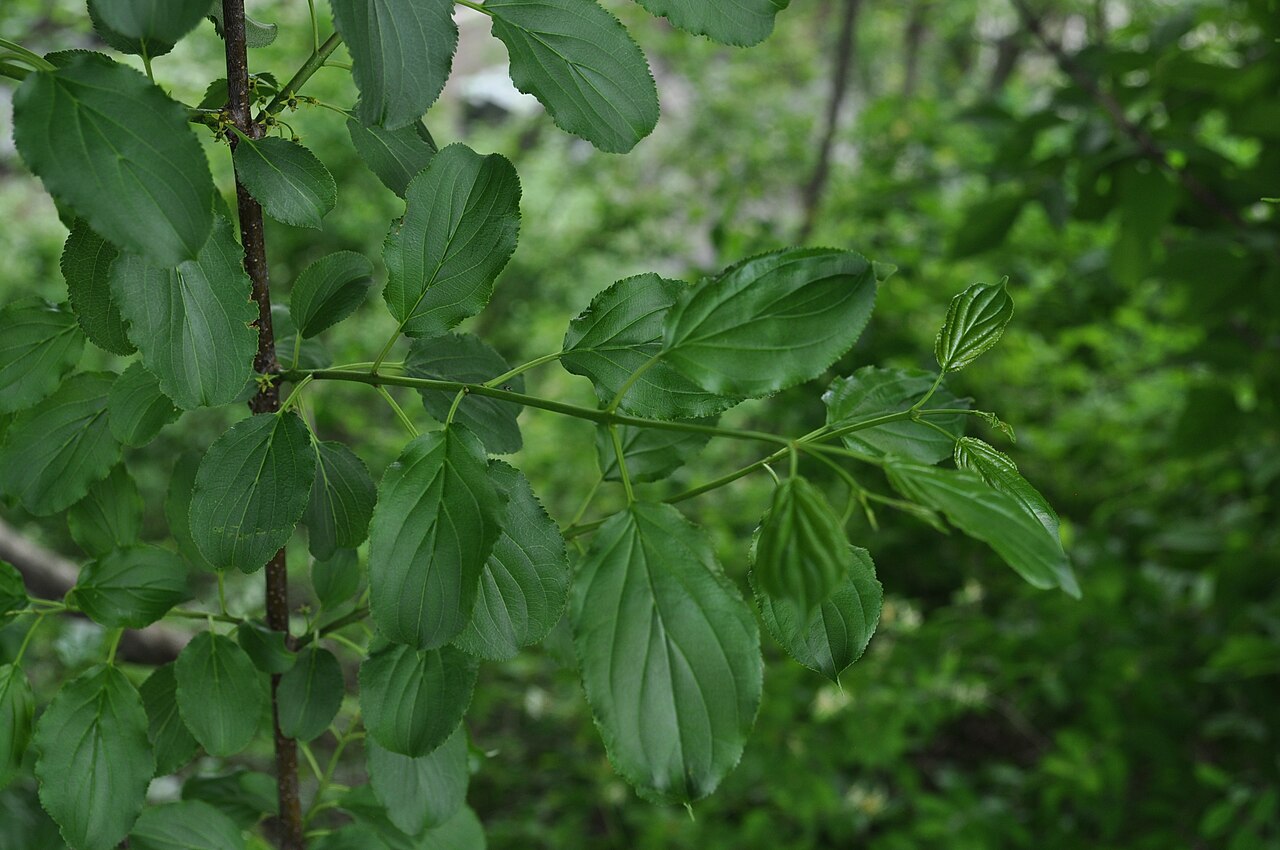
- Leaves: oval, finely toothed, with 3–5 pairs of veins that curve to follow the leaf edge toward the tip (arcuate venation) — very distinctive. They stay glossy green well into late fall.
- Berries: clusters of small black berries in fall on female plants.
Look-alikes: Native cherries and plums, and the related glossy buckthorn (Frangula alnus) — which has untoothed leaves and lacks the twig spines.
📸 1 photos to help you recognize it in different settings and seasons.Click any photo to enlarge and browse.
How to remove it
A great time to tackle buckthorn is late fall, when its leaves stay green long after natives have dropped — making it easy to spot and avoid harming everything else.
- Seedlings & small plants: pull or dig them when the soil is moist; a weed wrench helps with larger stems.
- Don’t just cut it. Cut stumps resprout vigorously.
- Larger plants: the most reliable kill is a cut-stump herbicide treatment (triclopyr or glyphosate) on the fresh cut, ideally in late summer or fall.
- Bag the berries so birds can’t spread them.
- Replant or mulch the cleared area to discourage re-invasion, and monitor for several years as the seed bank empties.
Sources and local guidance vary — when removing invasives, follow the latest advice from groups like the Massachusetts Invasive Plant Advisory Group (MIPAG) and your local conservation commission.