Invasive Species
Creeping Bellflower
Campanula rapunculoides
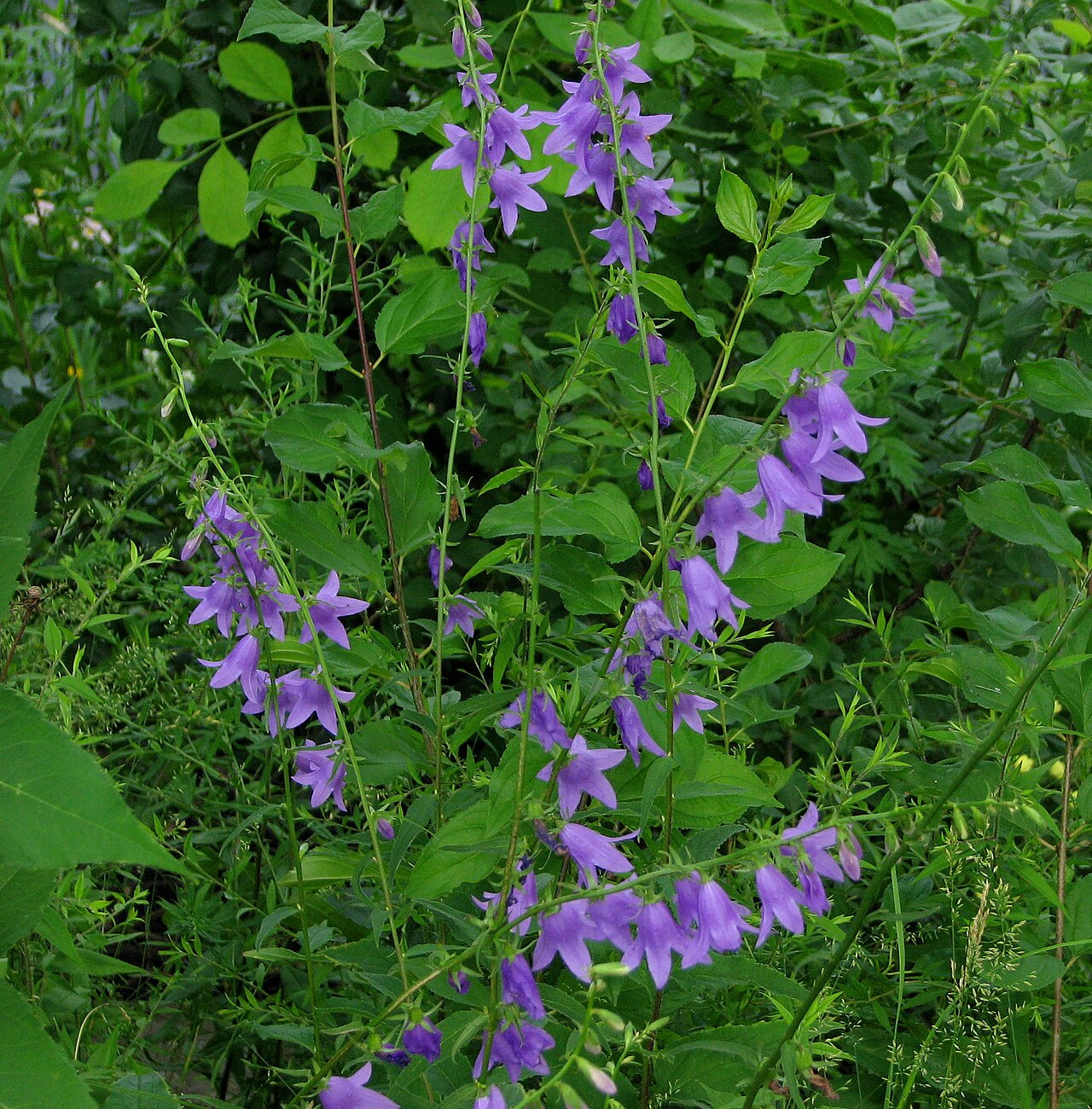
A pretty purple-belled garden escapee with deep, brittle roots that make it nearly impossible to dig out.
📝 Draft content — written for your review. Verify the identification and removal details before publishing.
Why it’s harmful
Creeping bellflower is often mistaken for a charming cottage-garden flower — which is how it escaped gardens and became a stubborn invader.
- It spreads two ways at once: by thousands of seeds and by a network of deep, white, creeping roots and tubers that send up new plants all around the parent.
- The roots are brittle, so digging often snaps them and every fragment left behind grows into a new plant.
- It out-competes both native plants and garden perennials, forming dense colonies.
- It can resemble — and crowd out — our delicate native harebell.
How to ID it
- Lower leaves: heart-shaped with toothed edges, on long stalks.
- Upper leaves: narrower and stalkless, alternating up the stem.
- Flowers: a tall spike, 2–3 feet, of nodding, purple, bell-shaped flowers lined up mostly along one side of the stem, blooming in summer.
- Roots: thick, white, fleshy tubers plus thin spreading rhizomes — visible when you dig.
Look-alike: Our native harebell (Campanula rotundifolia) is smaller and daintier, with flowers scattered (not crowded onto one side) and thread-like stems. It’s worth protecting.
📸 3 photos to help you recognize it in different settings and seasons.Click any photo to enlarge and browse.
How to remove it
There’s no quick fix — this plant is a marathon, not a sprint.
- Dig out the entire root system, going deep to lift the white tubers and rhizomes. Loosen the soil widely first so roots come out whole rather than snapping.
- Remove every fragment you can find — leftover root pieces are the #1 reason it comes back.
- Cut off flower spikes before they set seed to stop new seedlings while you work on the roots.
- Smother stubborn patches with cardboard and a thick layer of mulch over a full season or two to exhaust the roots.
- Spot-treat regrowth with herbicide where digging isn’t practical.
- Never compost the roots — bag and trash them.
- Expect to repeat this for two to three years before a patch is truly gone.
Sources and local guidance vary — when removing invasives, follow the latest advice from groups like the Massachusetts Invasive Plant Advisory Group (MIPAG) and your local conservation commission.