Invasive Species
Garlic Mustard
Alliaria petiolata
A shade-loving herb that poisons woodland soil and wipes out spring wildflowers.
📝 Draft content — written for your review. Verify the identification and removal details before publishing.
Why it’s harmful
Garlic mustard is a biennial herb that carpets the floor of woodlands and shady yards — one of the few invasives that thrives in deep shade.
- It releases chemicals that disrupt the soil fungi (mycorrhizae) that native wildflowers and tree seedlings need to grow.
- It out-competes spring ephemerals — trout lily, trillium, spring beauties — the early-season flowers that feed pollinators emerging hungry from winter.
- It’s an ecological trap for native butterflies like the West Virginia white, which lay eggs on it because it resembles their native host plants, but whose caterpillars then die.
- A single plant can produce hundreds of seeds that stay viable in the soil for years.
How to ID it
- First-year plants: a low rosette of kidney-shaped, scallop-edged leaves that stays green through winter.
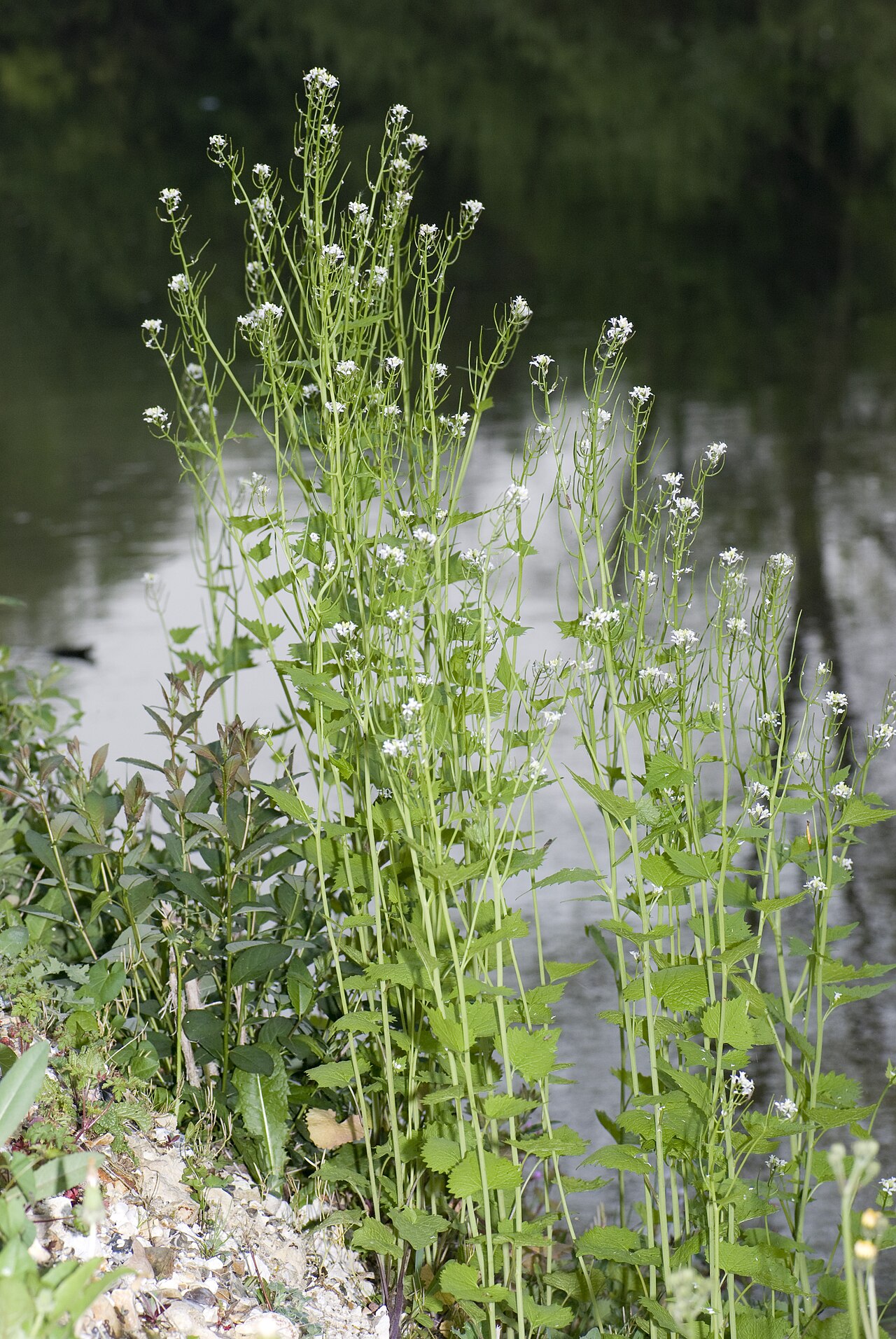
- Second-year plants: a flowering stalk 1–3 feet tall with triangular, sharply toothed leaves.
- Flowers: small, white, four-petaled, in clusters at the top, blooming in spring.
- Smell — the giveaway: crush a leaf and it smells distinctly of garlic.
- Seed pods: slender, upright pods (siliques) that follow the flowers.
📸 6 photos to help you recognize it in different settings and seasons.Click any photo to enlarge and browse.
How to remove it
Garlic mustard is one of the most satisfying invasives to remove because hand-pulling actually works.
- Pull it when the soil is moist, gripping low and removing the whole S-shaped root. Spring through early summer, before seeds set, is ideal.
- Time it before seeds ripen. Once pods form, even pulled plants can finish maturing seeds — so act early.
- Bag and trash it — do not compost. Pulled plants can still set seed, and seeds survive composting.
- Large stands: cut at ground level right at flowering time to prevent seeding.
- Keep at it for several years. The seed bank is long-lived, so revisit the same spot annually until no new plants appear — each year gets dramatically easier.
Sources and local guidance vary — when removing invasives, follow the latest advice from groups like the Massachusetts Invasive Plant Advisory Group (MIPAG) and your local conservation commission.